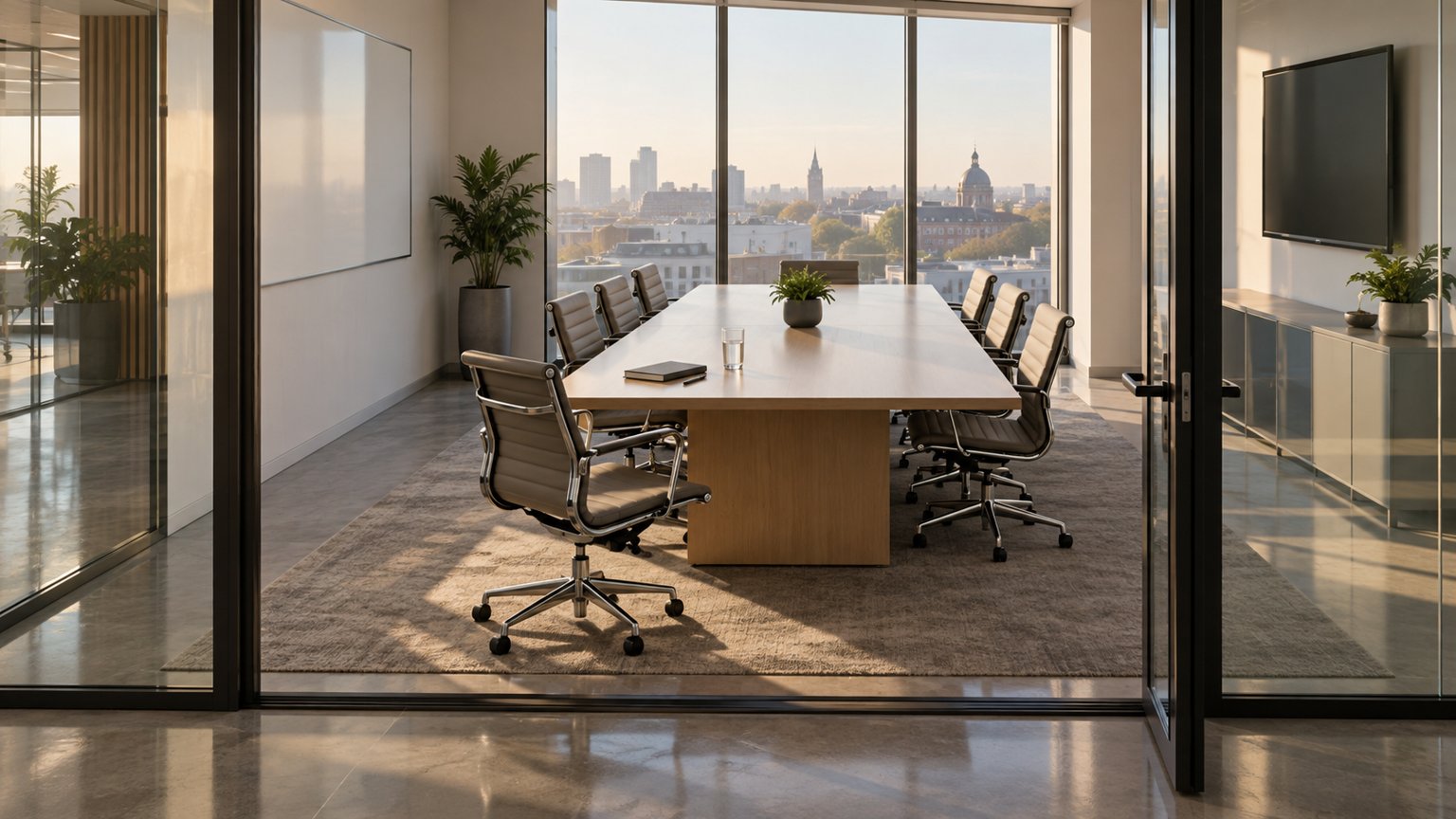
You're fine at 8:40. Coffee, emails, nothing wrong. Then the reminder pops up on your screen: the 9:30 with your manager, the one where you present the numbers. By 9:10 your stomach has tightened. By 9:20 you're working out how far the meeting room is from the toilets. By 9:28 you're wondering whether you can take the chair nearest the door without anyone noticing.
Nothing you had for breakfast knows there's a meeting. Something in you does.
If you live with IBS, work days can start to have a shape: the easy desk hours, and the moments you dread. This post is about those moments, and about the part of them that starts in your head long before it reaches your gut.
The meeting hasn't started, but your gut already knows the time. If your working week is quietly planned around where the toilets are and which meetings you can slip out of, the pattern is worth looking at on paper, not just living through.
Get the Mind-Gut Reset Workbook →
Where Stress Fits in IBS
The NHS describes IBS as a common condition that affects the digestive system, with symptoms like stomach cramps, bloating, diarrhoea and constipation that tend to come and go. It says the exact cause is unknown, and that IBS has been linked to things like oversensitivity in your gut and stress.
On its list of things that can trigger a flare-up, next to alcohol, caffeine and certain foods, the NHS names stress and anxiety. The same page is honest that flare-ups can also happen for no obvious reason, so not every bad morning has a meeting behind it.
But a meeting is not a food, and it can still sit on that list. If your gut tends to react to stress, the presentation, the review or the difficult phone call belongs in the picture alongside what you ate.
The Worry Starts Before the Meeting Does
Look closely at when your symptoms come. Is it in the middle of the meeting, or in the half-hour before it, on the walk down the corridor, or on Sunday evening when you remember what Monday holds? If it's before, notice what's going through your head at that moment. It may sound like this:
- What if I need to leave halfway through?
- What if they notice?
- What if it happens like last time?
"Like last time" carries a lot of weight. Imagine Sam, who has had IBS for six years. Two years ago Sam had to walk out of a client presentation, red-faced, and spent ten minutes in a toilet cubicle while a colleague finished the slides. Nobody mentioned it afterwards. But every presentation since has begun with that memory, whether Sam wants it to or not. The old moment was never really put down. It comes back each time the calendar shows a meeting that looks like that one.
This isn't weakness, and it isn't imaginary. Crohn's & Colitis UK describes the gut-brain axis as a direct two-way link between the gut and the brain, which communicate through nerve signals, hormones and other chemicals. They add that it's not clear exactly how this link works. What it does suggest is that the fear before the meeting and the cramp before the meeting are worth looking at together, rather than as two unrelated problems.

The Safety Habits That Keep the Day Small
After a bad morning or two, you may start taking precautions. They look sensible:
- skipping breakfast on meeting days
- always taking the seat by the door
- booking meetings for the afternoon, never first thing
- going to the toilet twice "just in case" before you walk in
- turning down the presentation and letting someone else do it
None of these is wrong. But it's worth noticing how long your own list has become, and how much of your working day it now decides.
Seat by the door. No breakfast. Two toilet trips before you walk in. Write down the precautions you take on a meeting day. That list is worth seeing on paper.
Get the Mind-Gut Reset Workbook →What Can Help
Here are some things worth asking about.
- Ask about talking therapy. The NHS says a GP may refer you for a talking therapy such as CBT, which can help if stress or anxiety is triggering your symptoms, and can also help you cope with your condition better. The same page says you can also refer yourself directly to an NHS talking therapies service without going through a GP.
- Ask about gut-directed hypnotherapy. A 2025 review of 12 studies involving 1,158 people with IBS concluded that gut-directed hypnotherapy may improve overall IBS symptoms, and that it improved pain more than the treatments it was compared with. Results varied a lot between the studies, so "may" is the honest word, not "will".
- Food and drink as support. The NHS lists caffeine and alcohol as possible triggers too. A third coffee to push through a nervous morning may be worth noticing.
Medicine has its place too. The NHS explains that if pharmacy medicines aren't helping, a GP may prescribe amitriptyline or citalopram, antidepressants that can also help ease IBS symptoms. Any change to a medicine you already take is a decision to make with your doctor, never on your own.

Meetings Can Become Ordinary Again
The NHS is clear that IBS can be very frustrating to live with and can have a big impact on your everyday life. It's also clear that diet changes and medicines can often help control the symptoms, and that a talking therapy such as CBT can help you cope with your condition better. Working on the fear that arrives before the meeting is not instead of that care. It sits alongside it.
One boundary, stated plainly. The NHS says to ask for an urgent GP appointment or get help from NHS 111 if you have lost a lot of weight for no reason, are bleeding from your bottom or have bloody diarrhoea, or find a hard lump or swelling in your tummy. Those need a doctor, not a breathing exercise before a meeting.
Sam didn't lose the memory of that presentation. What changed was that it stopped deciding which chair to take. Imagine the day that happens for you: the reminder pops up, you notice the old "what if", and you pick up your notebook and walk in anyway.
Which meeting this week is your gut already counting down to, and what is the "what if" behind it?
If your working week has quietly reorganised itself around your gut — the seats, the skipped breakfasts, the presentations handed to someone else — the thing to work on may not be the breakfast. Start here.
Get the Mind-Gut Reset Workbook →