
Think of the memory you trust most—the one you'd swear to. A childhood room. The face of someone as they said the thing that changed everything. The moment you knew. It feels like a recording: fixed, sealed, waiting in storage exactly as it happened, available for replay whenever you go looking for it. That sense of fidelity is total, and it is almost entirely an illusion. Your brain does not store memories the way a camera stores footage. It stores the ingredients, and every time you remember, it cooks the meal again from scratch.
And here is the part that should genuinely unsettle you. In the act of pulling that memory up, the brain doesn't just read it—it briefly unlocks it, makes it chemically unstable and open to change, and then re-saves it. Whatever you were feeling, believing, or being told in the moment of recall gets quietly stirred into the mixture before it goes back into storage. This is memory reconsolidation, and its implication is strange and vertiginous: the memories you have revisited the most—the ones you rehearse, the ones that define you—are the ones that have been edited the most times. The past you are most certain of is not the past best preserved. It's the past most frequently overwritten.
For years I built my identity on a handful of memories I was certain of—certain about what was said, who was at fault, what it meant about me. Learning that those memories had been quietly rewritten by every retelling, and that the version I defended was partly my own construction, didn't erase my past. It gave it back to me. If you're ready to loosen the grip of the story you keep replaying, I've gathered what genuinely helped me.
Explore Here →
Remembering Is an Act of Rebuilding
When an experience first lands, the brain takes hours to fix it in place—a process called consolidation, in which fragile new patterns are gradually stabilized into lasting physical changes between neurons. For most of the last century, that was assumed to be the end of the story: consolidated meant finished, filed, permanent. The discovery that upended this was simple and startling—when a consolidated memory is actively recalled, it doesn't stay solid. It reopens. For a window of a few hours it becomes labile, chemically vulnerable, requiring fresh protein synthesis to be stored all over again. Retrieval is not a read-only operation. Opening a memory unlocks it for editing, and it must be re-saved before it is safe again.
Which means memory is not a warehouse but a workshop. What you experience as recall is really reconstruction: the brain gathers scattered fragments—a sound, a feeling, a spatial impression, a fact you know—and assembles them into something coherent, smoothing over the gaps with plausible material drawn from what you know now, what you expect, and what you have since been told. The seams don't show. The reconstruction arrives whole, vivid, and confident, carrying no label distinguishing what was genuinely encoded from what was quietly filled in. You never feel your mind doing the filling. That's precisely why the finished memory feels like a recording rather than what it actually is—a very good reassembly.
And because the memory is soft in the moment you hold it, the present leaks into the past. Recall a childhood argument while you're angry today, and today's anger is folded into the re-saved version; revisit it years later, having reinterpreted the person involved, and that new understanding is stitched in too. Each retelling shifts the details a fraction toward the mood and meaning of the moment you're retelling it in. This is not damage or malfunction. It is how a mind built for prediction keeps its record of the past aligned with what it currently believes to be true. Your memory is not trying to be accurate. It is trying to be useful—and it will quietly sacrifice the first for the second.
The most vivid memories are no exception, though they feel like they should be. People carry so-called flashbulb memories—where they were when they heard the terrible news—with extraordinary confidence and detail. When researchers have collected accounts the day after such an event and then again years later, the accounts frequently disagree, sometimes wildly. And when people are shown their own original account, most trust the later, altered version over their own handwriting. Confidence and vividness tell you how strongly you feel a memory, not how faithfully it matches what happened. They are the two things we most reliably mistake for accuracy.
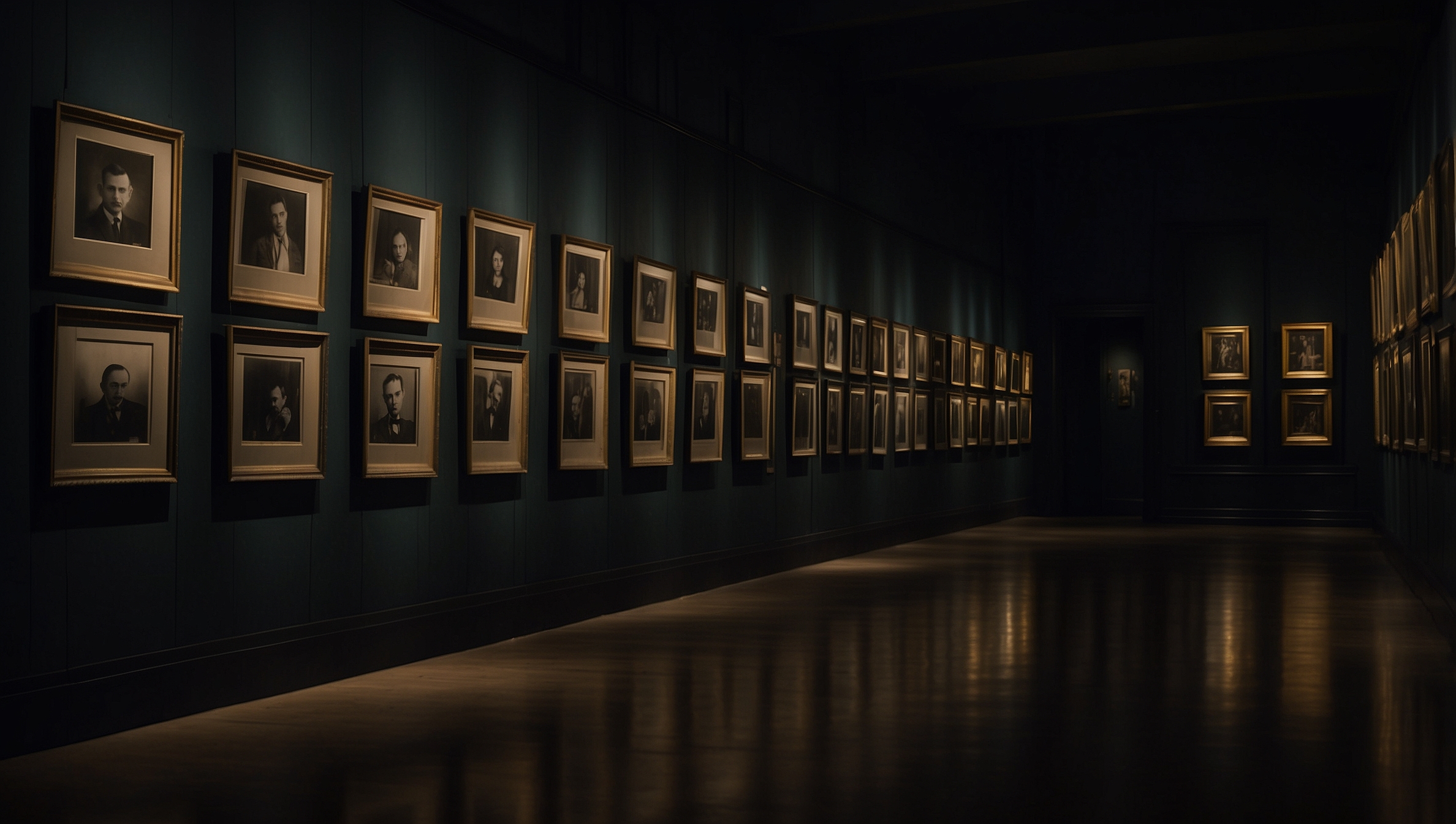
What a Rewritable Past Costs You
The first cost is that the story you tell about yourself drifts, and drifts in a direction. Each time you retell the account of why you left, why it failed, why they hurt you, the retelling shaves off what doesn't fit and sharpens what does, and that cleaner version is what gets saved. Do this fifty times over ten years and you are no longer remembering the event—you are remembering the last time you told the story, which was a copy of a copy of a copy. Rehearsing a memory doesn't preserve it. It erodes it into a smoother, simpler, more emotionally convenient shape—and that polished artifact is what you now mistake for your history.
Worse, the drift is rarely neutral, because the mind edits toward whatever it currently believes. If you have concluded that you were always the one who gave too much, memory obligingly surfaces and sharpens the evidence for it while the countervailing moments quietly thin out and fade. Your beliefs about your past shape your memories of it, and those memories then stand as proof of the beliefs—a closed loop with no outside witness. This is how a person accumulates a lifetime of vivid, sincere, deeply felt evidence for a story about themselves that was never quite true.
It reaches into how you hold other people, too. A partner's careless remark, replayed at three in the morning across a hundred nights, doesn't stay the size it was; it grows teeth, acquires an intent it may never have had, and hardens into a settled fact about who they are. Grudges are not memories being preserved—they are memories being cultivated, deepened and darkened by every rehearsal. The version of the person you cannot forgive may be, in significant part, a person you have slowly built out of your own repetitions.
And it explains the peculiar durability of pain. Trauma keeps its charge partly because the memory is revisited so often, and each revisiting under fear re-saves it with the fear intact, wiring the alarm a little deeper. The mind, trying to protect you by keeping the danger vivid, is in fact rehearsing the danger—practicing it, strengthening it, keeping it fluent. The past doesn't hurt you because it happened. It hurts you because you keep reconsolidating it, and every replay teaches your body that the threat is still current.
The turning point for me wasn't discovering that my memories were unreliable—it was realizing that unreliability cuts both ways. If a memory can be quietly rewritten by fear and repetition, it can also be rewritten by understanding, safety, and a new ending. That single fact changed what I believed was possible about my own past. These are the resources that helped me learn to work with it rather than against it.
Explore Here →
Learning to Rewrite on Purpose
Everything that makes reconsolidation dangerous also makes it the most hopeful mechanism in the mind. A memory that can be corrupted by repetition can be revised by design. The window that lets fear seep in is the same window that lets safety in—and the brain does not ask which one you're bringing. This is why the therapies that actually shift old pain all share a hidden structure: they bring the memory fully online, and then, while it is soft, deliver an experience that contradicts it. You cannot change what happened. You can absolutely change what gets saved the next time your mind opens the file—and that saved version is the one you'll live with.
The practical form is simple to describe and slow to master. Bring the memory up vividly enough that you actually feel it in the body, because a memory recalled coldly and intellectually never unlocks—it has to be genuinely activated to become editable. Then, while it is live, introduce what was missing: the fact that you survived it, the compassion you'd offer a friend, the adult understanding you didn't have at the time, the plain sensory evidence that you are here now and the danger is not. Stay long enough for the mismatch to register. Then let it close. Activate, contradict, re-save. Do it enough times and the memory keeps its facts but loses its grip—which is exactly what healing has always physically been.
This is also why you must be careful what you rehearse. Every replay of a grievance in the shower, every mental re-litigation of the argument on the drive home, is not a neutral act of remembering—it is a save operation, and you are choosing what gets written. Ruminating on an old wound while feeling the wound is, in the most literal neurological sense, practicing it. You are always rewriting; the only question is whether the pen is in your hand or in the hands of whatever mood happened to show up.
And hold your certainty about the past with a lighter grip. When you find yourself immovably sure of what was said, what they meant, who was at fault, remember that the vividness you're feeling is not evidence—it's just how confidently your mind reassembled the fragments this time. The person across from you, remembering it differently, is not necessarily lying. They may simply be running a different reconstruction, no less sincere and no less edited than yours. Being wrong about your own past is not a failure of character. It is the ordinary consequence of having a mind that rebuilds rather than replays—and knowing that is the beginning of both humility and forgiveness.
What all of this finally offers is a kind of freedom you were told you didn't have. The past is supposed to be the one thing that is finished, immovable, done to you and beyond appeal—and it isn't. It lives in you as a living tissue of reconstructions, and it is touched, every time you go to it, by who you are on the day you arrive. That means the work of becoming a different person is not only forward-facing. It runs backward too, into the record itself. You are not the sum of what happened to you. You are the sum of how you have most recently remembered it—and that, unlike the events themselves, is still yours to write.
If the memories you replay the most are the ones you have changed the most—then the past you are defending so fiercely may be less a record of what happened to you than a monument to what you have practiced believing. What would you remember differently, if you knew the file was open right now?
Your mind has been quietly editing your past your entire life—usually in the direction of whatever you were already afraid was true. But the same door that let the fear in can let something else in. If you're ready to stop rehearsing the version of your story that keeps you stuck, and to start deliberately writing the one you can actually live from, start here.
Explore Here →