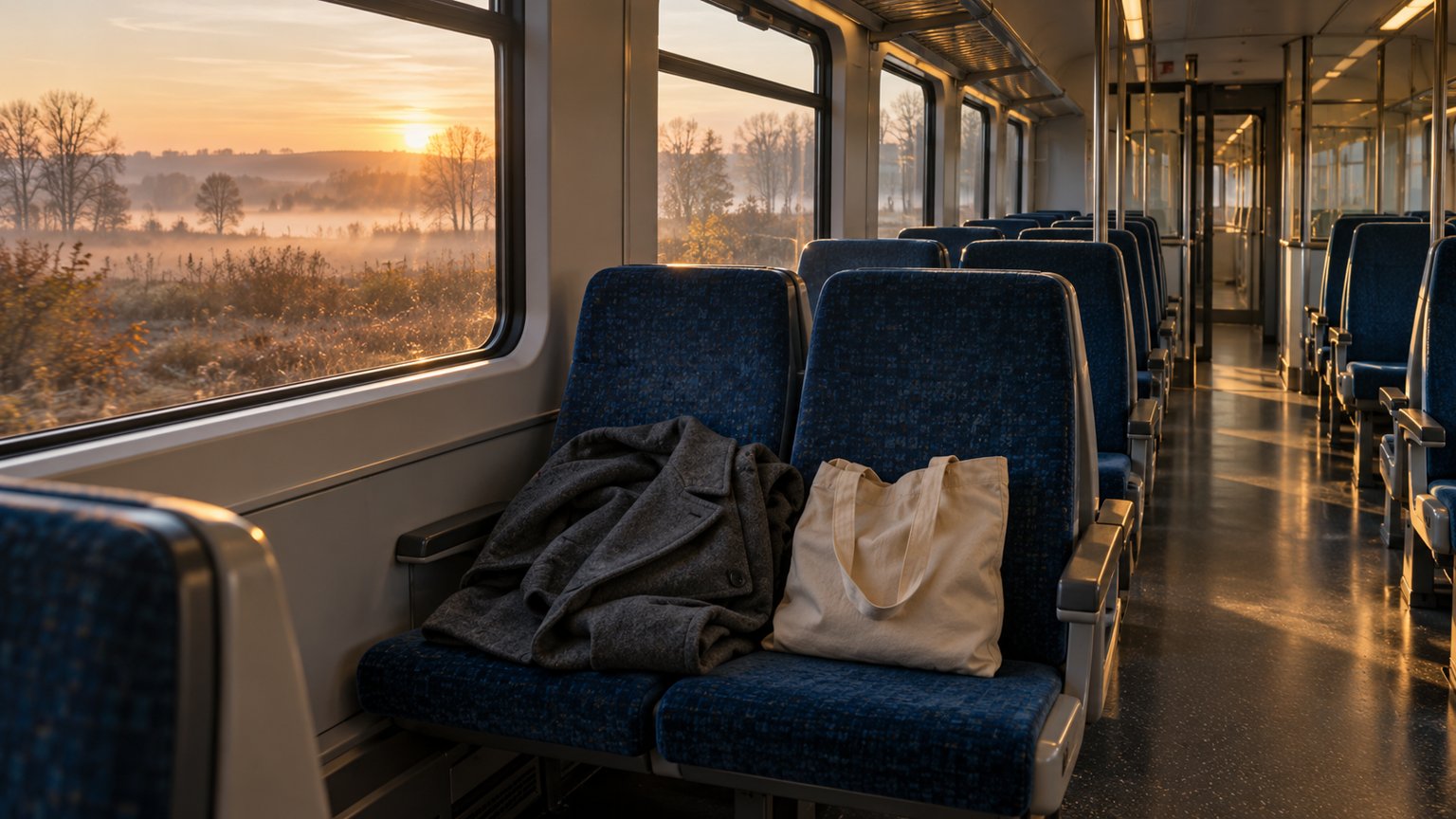
It's ten past eight. The train slows, then stops in the middle of nowhere. Fields outside, mist on the hedges. The driver says there will be a short delay. Around you, people sigh and go back to their phones.
You were fine a minute ago. Then one thought arrives: there's no toilet on this train, and I can't get off. Within seconds your stomach tightens, there's a low gurgle, and the urge you didn't have before is suddenly all you can think about. You start counting the minutes to the next station.
If you live with IBS, you may know this exact moment: the urge that seems to come from the fear of the urge. This post is about why that loop happens, why it isn't "all in your head", and what can help it loosen.
It can help to see your own pattern on paper: which journeys went wrong, what was on your mind that morning, and how often the worry arrived before your gut did.
Get the Mind-Gut Reset Workbook →The Symptom Is Real, and So Is the Fear
Start with what's true. The NHS lists diarrhoea among the main symptoms of IBS, noting that you may have watery poo and sometimes need to poo suddenly. That sudden need is not something you imagine. It's part of the condition.
The same NHS page lists stress and anxiety among the things that can trigger IBS flare-ups, alongside alcohol, caffeine and certain foods. So when the fear of not reaching a toilet shows up, it isn't only an unpleasant feeling sitting on top of your symptoms. It's one of the things that can stir them.
That's what makes this kind of diarrhea so cruel. The thing you're afraid of and the thing that can set it off are, in that moment, the same thing.
How One Bad Morning Teaches Your Mind to Watch
Often this loop has a starting point. Maybe one morning, years ago, you didn't make it in time, or almost didn't. A bus that wouldn't stop. A queue that wouldn't move. You may not think about that day often, but some part of you never forgot it.
After a moment like that, the mind tends to start scanning. Where's the nearest toilet? How long is this journey? What if the door is locked? Any place you can't leave easily, a train, a meeting, a cinema seat in the middle of a row, can start to feel like a trap before anything has happened.
Imagine Tom, a made-up example, who has had IBS for six years. He can work from home all day without a problem. But the moment he steps onto the 8:02, he notices every gurgle. Tom's gut isn't different on the train. What's different is that his attention is locked onto it, and his body is braced as if something bad is about to happen.
That bracing matters. The NHS says IBS has been linked to oversensitivity in your gut and stress, among other things. When you're on high alert and watching for every signal, a gut that's already sensitive has a lot more to report.

Why It's Not "Just Anxiety"
It's important to say this clearly: none of this means your IBS is caused by your mind, or that you could stop it by "just relaxing". The NHS is plain that the exact cause of IBS is unknown.
What it does mean is that fear is one part of the loop you can actually reach. You can't decide your gut will behave. But you can, slowly, change how loudly the alarm rings when you step onto a train.
And sometimes the alarm is carrying more than the train. Old worries about being embarrassed, about being the one who causes a fuss, about losing control in front of people, can all ride along. If being ill was treated as shameful when you were growing up, the fear of an accident in public can feel much bigger than the accident itself would ever be. Noticing whose voice is in that fear can take some of its weight away.
What Can Help in the Moment
These won't stop IBS, and they're not meant to. They're ways to stop feeding the part of the loop that comes from fear.
- Name the thought. Quietly say to yourself, "That's the trapped thought again." Giving it a name puts a small gap between you and it, so it's a thought you're having, not a fact about the next ten minutes.
- Breathe out longer than you breathe in. In for a count of four, out for a count of six or seven, a few times. It gives your attention something to do other than scan your stomach.
- Loosen your body on purpose. Notice your jaw, your shoulders, your stomach muscles. When you're braced, you often hold all three. Let them drop, even a little.
- Plan, then stop planning. Knowing where the toilets are before a journey is sensible. Checking the map six times on the way is the fear asking for more. Do it once and put it away.
- Carry a small "just in case". A spare pair of underwear and some wipes in your bag. Knowing it's in your bag turns "what if" into "I've got that covered", which gives the trapped thought less to hold on to.

Help for the Mind Side of IBS
If you can see that fear is part of your pattern, you don't have to untangle it alone. The NHS says a talking therapy such as CBT can help if stress or anxiety is triggering your symptoms, and can also help you cope with your condition better. The same page says you can refer yourself to NHS talking therapies without a GP referral.
Gut-directed hypnotherapy is another option worth asking about. A 2025 review of 12 studies found it may improve overall IBS symptoms and improved pain more than the comparison treatments, including when it was delivered in groups. The Rome Foundation says brain-gut psychotherapies are believed to directly influence gut symptoms, particularly pain and discomfort, as well as improve coping and quality of life.
These can help alongside your usual care, not instead of it. If you take medicine for your IBS, any change to it is a conversation for your doctor. Food, sleep and a steadier routine still matter too, as support for the work on the fear, not as a list of rules to be afraid of breaking.
The workbook includes a load inventory, a 14-day log and an extended-exhale practice tracker, so you can see which mornings the fear arrived first, and which ones it didn't.
Get the Mind-Gut Reset Workbook →When It's More Than IBS
One boundary, stated plainly. The NHS says to ask for an urgent GP appointment or get help from NHS 111 if you've lost a lot of weight for no reason, are bleeding from your bottom or have bloody diarrhoea, find a hard lump or swelling in your tummy, or have shortness of breath, noticeable heartbeats and paler skin than usual. Those need a doctor, not a breathing exercise.

What Can Change
The train will still stop between stations sometimes. What can change is what happens inside you when it does. The first time the thought arrives and you name it, breathe out slowly and let your shoulders drop, the urge may not vanish. But it may not climb either.
Each journey like that is a small piece of evidence against the alarm. Over weeks, with support, the mind can learn that a closed train door is not a trap. Feeling much calmer on journeys, and much better in your gut, is a realistic hope.
If the fear rode along a little more quietly, where would you go that you've been avoiding?
If your days have quietly arranged themselves around where the toilets are, the place to start isn't another route plan. It's the pattern underneath it.
Get the Mind-Gut Reset Workbook →