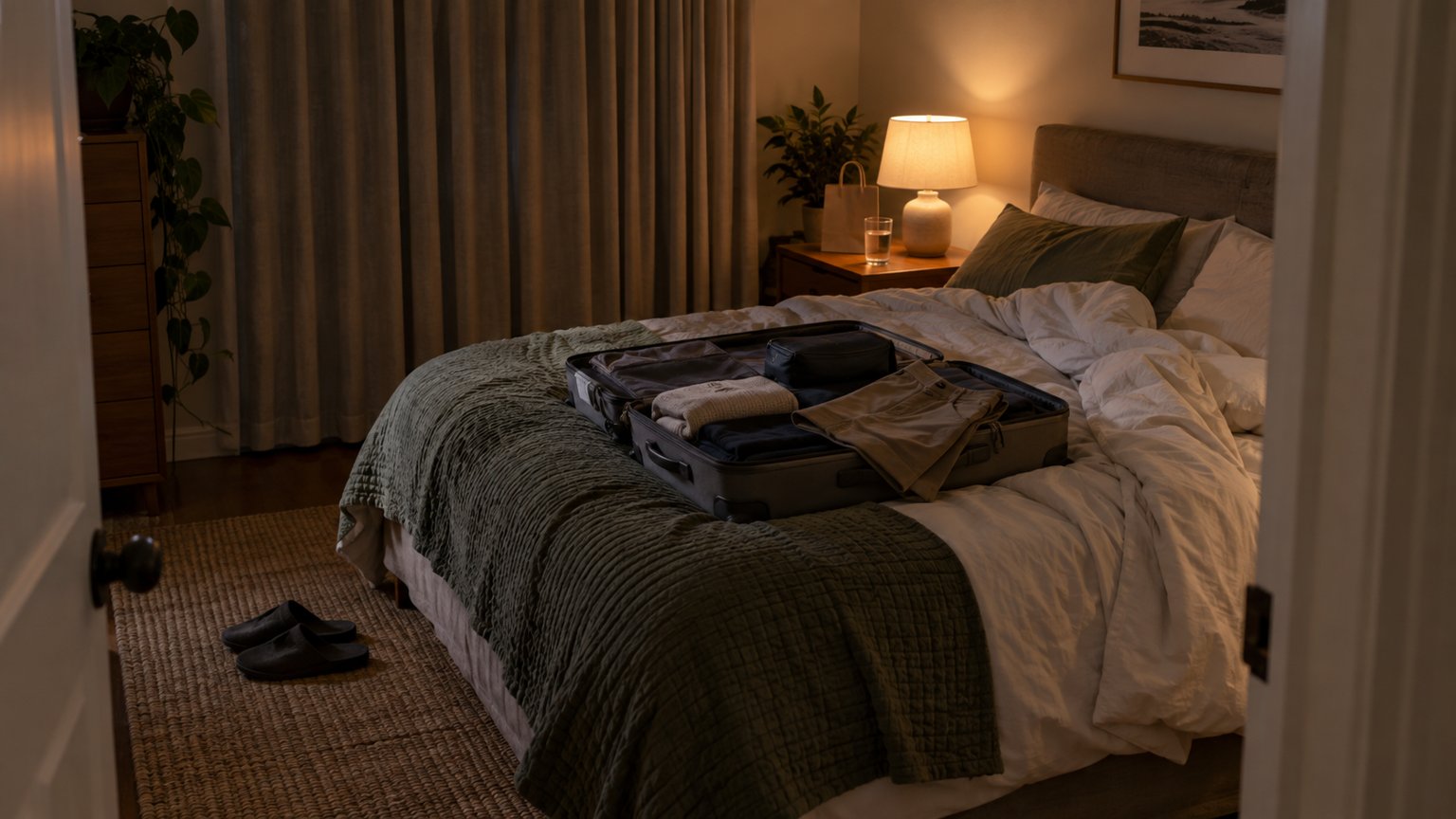
It's the night before the trip. The suitcase is open on the bed, and you've packed more spare clothes than a three-day visit needs. The alarm is set for five. You were looking forward to this for weeks.
Then, around eleven, the first cramp. You lie down, get up again, check the train times one more time and work out where the toilets are on the route. By the time you should be asleep, you're already running through tomorrow: the queue, the hour with no stop, the table at a restaurant you've never been to.
If you live with IBS, you may know this pattern well. The trip hasn't started, and your gut has. This post is about why that happens, and what the worry itself is doing, because that is the part of travel you can actually work on.
Before your next trip, it can help to write down what your gut did last time and what was on your mind in the days before. Patterns show up on paper that you can't see from inside a flare.
Get the Mind-Gut Reset Workbook →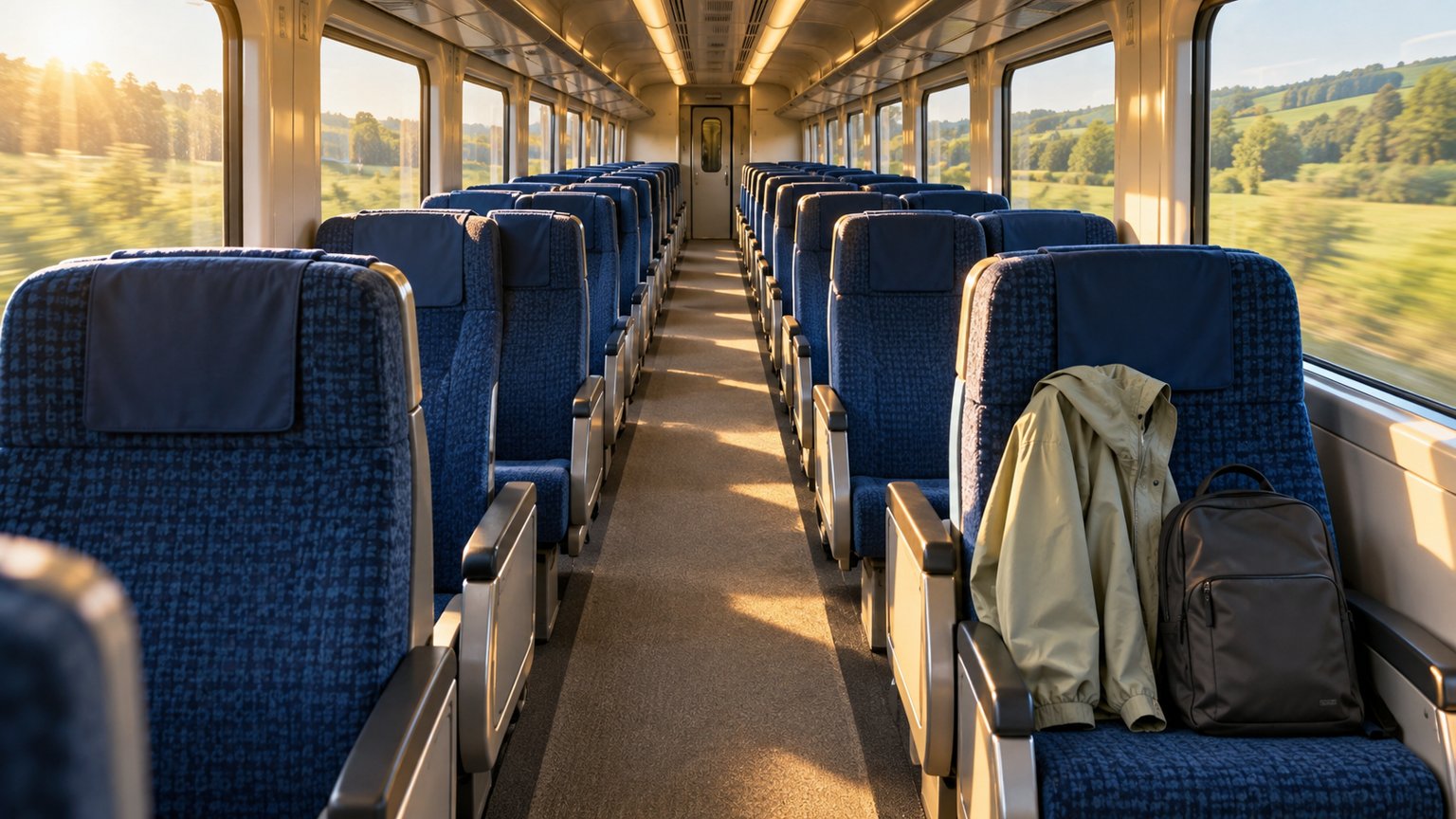
Why Travel Can Set Off IBS Before You've Left Home
Travel quietly takes away the things IBS relies on: your own toilet, your usual food, your usual times, and the freedom to leave. For a gut that may make you need to poo suddenly, a train with one toilet or a long queue at security is not a small thing. The worry makes sense.
The NHS lists what can trigger an IBS flare-up. Next to alcohol, caffeine and certain foods, it names stress and anxiety. It also says that IBS flare-ups can happen for no obvious reason, so not every travel flare has a story behind it.
A trip can bring several of those triggers together at once: the stress of getting there, food you didn't choose, a glass of wine you'd normally skip, coffee to stay awake. And the worry doesn't wait for departure day. It can start the night before, or the week before.
Your Mind Is Travelling Ahead of You
Here is the part worth understanding. Crohn's & Colitis UK describes the gut-brain axis as a direct two-way link between the gut and the brain, with the gut and brain communicating through nerve signals, hormones and other chemicals. The NHS says the exact cause of IBS is unknown, but it has been linked to things like oversensitivity in your gut and stress.
So when you lie awake picturing the queue with no toilet in sight, that picture is not only in your head. Your gut is on the other end of the line.
And the picture is often an old one. Imagine Marta, who has had IBS for eight years. Six years ago, on a coach to a friend's wedding, she had to ask the driver to stop on the hard shoulder. Nobody said anything unkind. She still remembers every face turning round. She has never told anyone how much that moment still sits with her.
Every trip since, her body has been getting ready for that coach. She packs spare clothes, doesn't eat breakfast, sits by the door. The planning helps her feel safer. But the fear underneath it has never been looked at, only managed, and each trip keeps it fresh.
That is what an emotion not let go of can look like. Not a drama, just an old moment still making the travel plans.

What Can Help With the Mind Side
Planning your route and your toilet stops is sensible. It's worth keeping. But if the planning is the only thing you do, the fear stays in charge. These go after the worry itself:
- Talking therapy. The NHS says a talking therapy such as CBT can help if stress or anxiety is triggering your symptoms. It can also help you cope with your condition better. In the UK you can refer yourself directly to an NHS talking therapies service without a referral from a GP.
- Brain-gut psychotherapies. The Rome Foundation says there is now adequate evidence to support the integration of brain-gut psychotherapies into gastroenterology care, and that they are believed to directly influence GI symptoms, particularly pain and discomfort, as well as improve coping and quality of life.
- Naming the old moment. If one trip went badly years ago, say it out loud to someone, or write it down. What happened, who was there, what you felt. It's a way of looking at the moment instead of only steering round it.
None of this replaces the care your doctor gives you. It works on a different part of the problem: the bracing that starts before the bag is even zipped.
The Practical Side, Kept in Its Place
Practical planning still belongs in the bag. It just shouldn't be the whole plan.
- Before a long trip, ask your GP or pharmacist what's worth having with you. Don't start, stop or change any medicine on your own for the journey.
- Keep your usual food and drink where you can. The NHS names alcohol, caffeine and certain foods, such as spicy or fatty food as possible triggers, and a holiday tends to bring all three.
- Pick the aisle seat and know where the toilet is, then let that be enough. A fifth check of the route is the fear planning, not you.
- Tell one person you're travelling with. That way you're not the only one holding it.
The Mind-Gut Reset Workbook has a section on eating away from home and a flare first-aid plan you can take with you on the trip.
Get the Mind-Gut Reset Workbook →
Travel With IBS Can Get Easier
The NHS is honest that IBS can be very frustrating to live with and can have a big impact on your everyday life. It also says diet changes and medicines can often help control the symptoms. Feeling much better is possible, and trips you actually enjoy can be part of that.
One boundary, stated plainly. The NHS says to ask for an urgent GP appointment or get help from NHS 111 if you have lost a lot of weight for no reason, are bleeding from your bottom or have bloody diarrhoea, or find a hard lump or swelling in your tummy. That applies on holiday too.
Marta did go to the next wedding. Before it, she told a friend about the coach for the first time, and the friend laughed kindly and said she hadn't even noticed. Marta still sat near the door. But the night before, she slept.
When your gut starts the trip before you do, which journey is it really remembering?
If travel keeps setting off your gut, start by mapping the worry that comes before it. That part is within your reach.
Get the Mind-Gut Reset Workbook →