
The driving test is at nine. You laid your jacket out last night and set two alarms. You made toast and took one bite. The coffee is going cold beside the plate.
Since seven you've been to the toilet three times. Each time you thought that was the last one. Each time, ten minutes later, the cramp came back, low and urgent, as if your body hadn't heard the news that there is nothing left.
You didn't eat anything strange. You slept badly, but not that badly. The only thing different about today is what today means to you. That is the part this post is about, because it is also the part you can work on.
If your gut keeps reacting before big days, it can help to write down which days, and what was on your mind in the hours before. A pattern on paper is easier to work with than a pattern you only feel.
Get the Mind-Gut Reset Workbook →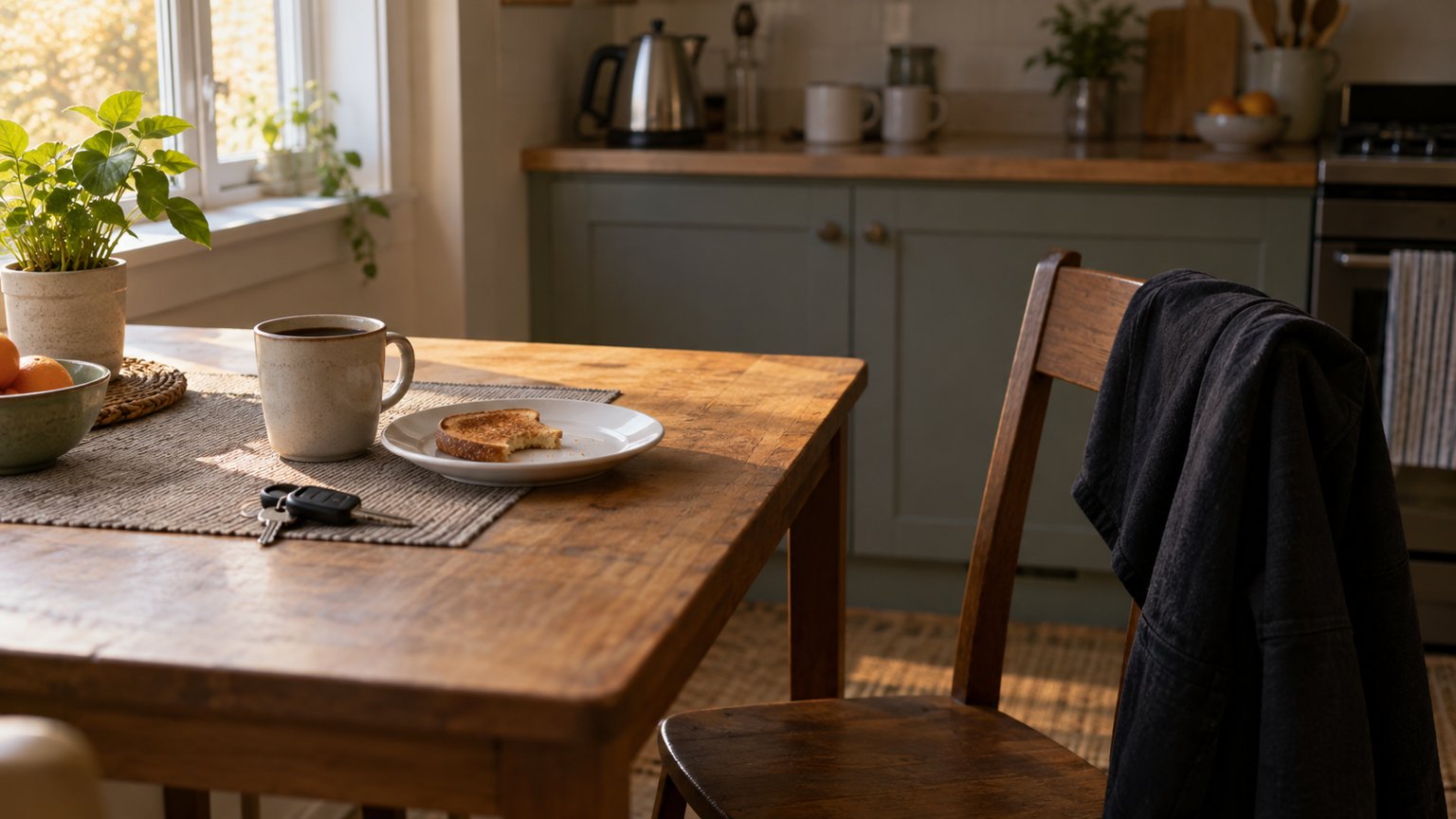
Why Nerves Can Go Straight to Your Gut
Crohn's & Colitis UK describes the gut-brain axis as a direct two-way link between the gut and the brain. It explains that the two communicate through nerve signals, hormones and other chemicals. So when your mind treats nine o'clock as a threat, your gut is on the other end of that line.
The same guide says that stress can have physical effects too, and that some symptoms, like diarrhoea and fatigue can be like those of Crohn's or Colitis. It also points out that some stress is normal: the kind you feel if you're taking an exam or running a marathon is often helpful as it can make you feel more alert. Nerves before a test are not a sign that something is wrong with you.
If you live with IBS, the NHS lists stress and anxiety among the things that can trigger a flare-up, next to alcohol, caffeine and certain foods. One of the main IBS symptoms it describes is diarrhoea, where you may have watery poo and sometimes need to poo suddenly. So for a gut that already reacts easily, a big morning can be enough to set it off.
It's Often Not About Today
Here is the part worth slowing down for. Sometimes a big day carries more than the day itself.
Imagine Daniel, who is thirty-six and taking his driving test for the second time. When he was seventeen, his father taught him to drive, and those lessons usually ended with shouting from the passenger seat. Daniel stopped driving for almost twenty years. He never really talked about why.
Now there is an examiner in the passenger seat instead. A calm stranger with a clipboard. Daniel knows that. But the morning of the test, his gut isn't getting ready for a stranger. It's getting ready for the car he sat in at seventeen.
Nobody can say for sure what is behind Daniel's gut that morning. But the fear he feels is real, and so is the old memory sitting next to it. Both are worth his attention.
Crohn's & Colitis UK notes that anxiety is not always constant but may just appear in certain situations. Knowing which situations set yours off, and what they remind you of, is useful information. It's not a weakness.

What Can Help With the Mind Side
Going to the toilet before you leave is sensible. Knowing where the toilet is at the test centre is sensible. Keep both. But if that's all you do, the fear stays in charge of the morning. These go after the nerves themselves:
- Relaxation, practised before the day. Crohn's & Colitis UK says that learning some relaxation techniques may help to reduce anxiety, pain and stress levels and improve your mood if you have Crohn's or Colitis. Practise on ordinary days, so it's familiar when you need it.
- Mindfulness. The same guide describes mindfulness as noticing when we are stuck in patterns of worrying about the past or future, and says it can be helpful for Crohn's and Colitis, as a way of developing skills for managing stress.
- Talking therapy. For IBS, the NHS says a talking therapy such as CBT can help if stress or anxiety is triggering your symptoms. In the UK you can refer yourself directly to an NHS talking therapies service without a referral from a GP.
- Naming the old moment. If one memory sits under your nerves, say it out loud to someone you trust, or write it down: what happened, who was there, what you felt. It's a way of looking at the moment instead of only bracing against it.
None of this replaces the care your doctor gives you. It works on a different part of the problem: the fear that arrives before the event does.
The Practical Side, Kept in Its Place
- Go easy on the coffee that morning. For IBS, the NHS names alcohol, caffeine and certain foods, such as spicy or fatty food as possible triggers. A second cup to feel sharp can work against you.
- Arrive a little early, not very early. Enough time to find the toilet once. Not an hour in a waiting room with nothing to do but listen to your gut.
- If this happens often, tell your GP. They can check what's going on and talk through what might help. Don't start, stop or change any medicine on your own for a big day.
The Mind-Gut Reset Workbook has a load inventory for spotting what builds up before a flare, and a short regulation practice you can learn on quiet days and use on hard ones.
Get the Mind-Gut Reset Workbook →
It Can Get Easier
If you live with IBS, the NHS is honest that it can be very frustrating to live with and can have a big impact on your everyday life. It also says diet changes and medicines can often help control the symptoms. Big mornings don't have to belong to your gut forever.
One boundary, stated plainly. The NHS says to ask for an urgent GP appointment or get help from NHS 111 if you're bleeding from your bottom or have bloody diarrhoea, if you have lost a lot of weight for no reason, or if you find a hard lump or swelling in your tummy. Nerves don't explain those.
Daniel told his partner about the lessons with his father the week before the test. It was the first time he'd said it out loud. On the morning, he still went to the toilet twice. But he ate the toast, and he drove away from the test centre with the window down.
Before your next big day, what is the fear really about, and who could you tell?
If nerves keep sending you to the toilet before the days that matter, start by mapping what comes before them. That part is within your reach.
Get the Mind-Gut Reset Workbook →