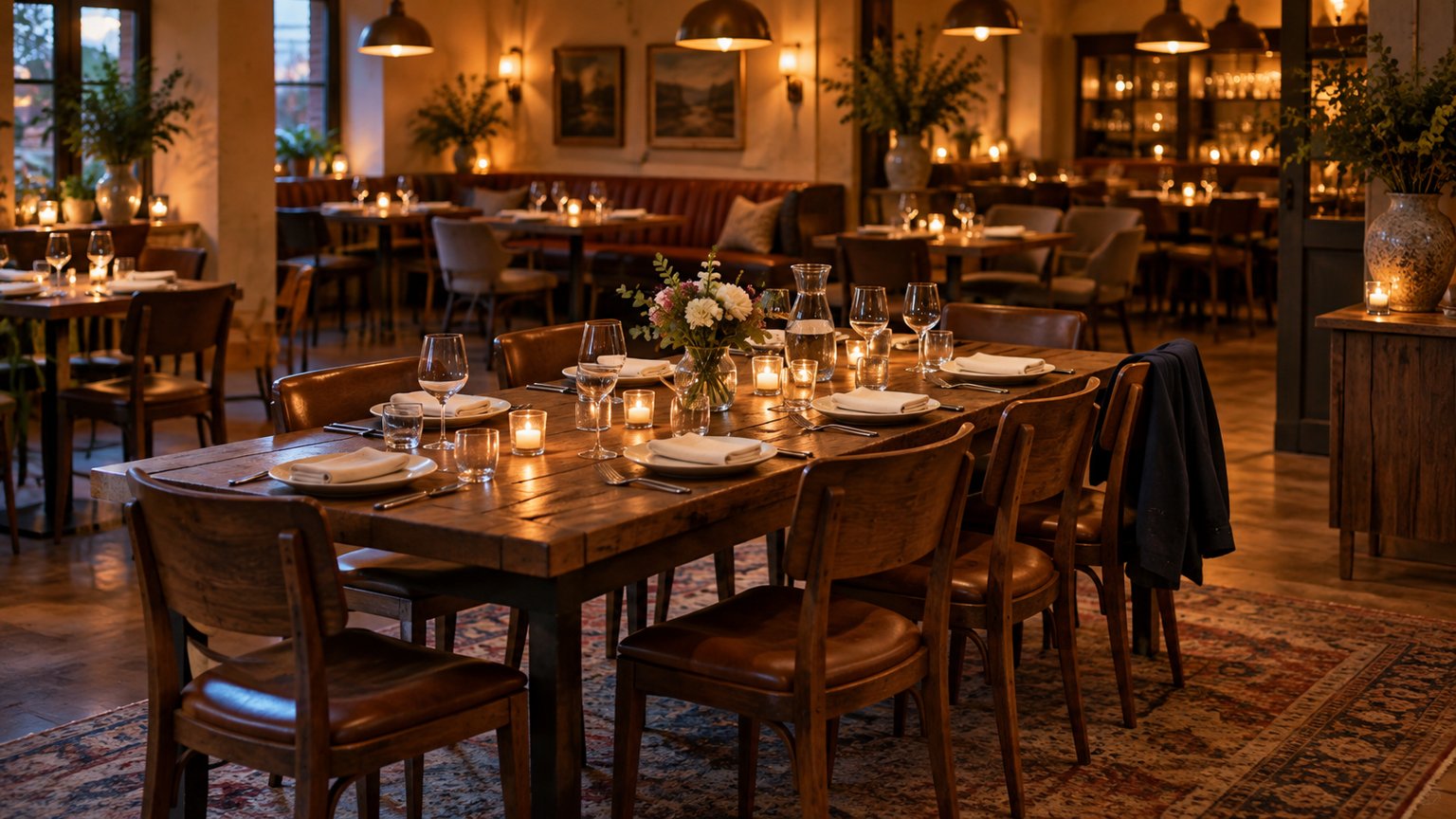
The message came in on Monday: Dinner for my birthday, Friday at seven, that little Italian place. You're coming, right? You sent back a heart and "wouldn't miss it". Then you opened the restaurant's website and read the menu. Twice. You looked at the photos to work out where the toilets are. By Wednesday you'd decided what you'll order, what you'll say if someone asks why you're only having the plain fish, and that you'll probably eat nothing on Friday until you get there.
The dinner hasn't happened yet. But for you, in a way, it started on Monday.
If you live with Crohn's disease or ulcerative colitis, this may sound familiar. This post is about why eating out can weigh on your mind for days before the meal, what that worry can do to your gut, and what can help you get back to the table with less dread.
If the planning before a meal out has become its own job, the workbook's chapter on eating away from home gives you a simple way to prepare without letting the plan take over your week.
Get the Mind-Gut Reset Workbook →Why the Worry Arrives Days Early
You're not being dramatic. Crohn's & Colitis UK quotes Ally, who lives with Crohn's: "Going out can sometimes feel overwhelming and give you so much anxiety, always wondering where the toilet is, or worrying will I suddenly feel ill when I'm out."
The same guide explains that this kind of anxiety is often tied to a place, not to the whole day. You might feel anxious if you do not have easy access to a toilet, but then return to normal when you reach home. A restaurant is a place where you don't choose the food, the timing, the seat or the distance to the door. To a mind that has lived through flares, that is a lot of unknowns in one evening.
So your mind starts rehearsing. Every time you picture Friday, you may notice it in your body as well as your thoughts. Crohn's & Colitis UK lists anxiety symptoms such as feeling tense, nervous, or restless and feeling like you can't stop worrying. You may be living the dinner several times before you ever sit down.

What the Worry Can Do to Your Gut
This is the part worth reading slowly, because it's where your thoughts and your bowel meet.
Crohn's & Colitis UK describes the gut-brain axis as a direct two-way link between the gut and the brain, carried by nerve signals, hormones and other chemicals. The dread you feel on Wednesday evening is not sealed off from your gut. It's on the same line.
The guide says plainly that anxiety can make gut symptoms worse, and that there's some evidence that stress might make your Crohn's or Colitis symptoms worse and increase the risk of a flare-up. A 2022 systematic review of 38 studies with 4,757 people with IBD found that psychological stress appears to come before IBD flares, though the authors say it is still unclear how stress is best managed.
Please read that carefully. It doesn't mean worrying about a dinner caused your Crohn's or colitis. It doesn't mean one anxious week will set off a flare. It means the fear you carry into Friday is part of the picture, alongside your treatment, and it's a part you can work with.
There's a loop here too. Crohn's & Colitis UK describes how people can end up in a cycle, with each one making the other worse. You worry about your gut at dinner. Your gut reacts to the worry. And that reaction becomes the proof your mind uses to worry harder next time.
The Habits That Feel Safe but Keep the Fear Going
When eating out feels risky, it makes sense to protect yourself. The trouble is that some ways of protecting yourself can quietly make things heavier.
Not eating all day before the meal. It feels like a clever plan. But Crohn's & Colitis UK notes that food worries can lead to behaviours like binge eating, skipping meals, or restricting food, which means you may risk not getting enough nutrients from food, which can complicate your condition. If your list of "safe" foods keeps getting shorter, that's worth raising. The guide says nearly 1 in 5 people with IBD have some symptoms of ARFID, a pattern of eating only a narrow range of foods, and suggests talking to your IBD team, who may be able to refer you to a dietitian.
Saying no, again. Cancelling brings instant relief. But the guide explains that symptoms can limit how much you can go out with friends and family, which may set you apart and increases isolation, and that these feelings can increase the risk of depression or anxiety.
Pretending you're fine. Ordering the dish you're scared of so nobody asks questions, then spending the evening watching your own stomach. That's a lot of tension to carry through three courses.
What Can Help, Starting With the Mind
The fear has had days to build, so the help can start days early too.
- Calm your body before you leave the house. Relaxation techniques may help to reduce anxiety, pain and stress levels and improve your mood if you have Crohn's or colitis. A few minutes of slow breathing, with the breath out longer than the breath in, is an easy place to start. Do it on Friday afternoon, not only at the table.
- Notice the rehearsals. When you catch yourself picturing the worst version of Friday again, name it: "I'm rehearsing." Mindfulness is about noticing when we are stuck in patterns of worrying about the past or future. You don't have to stop the thought by force. Just notice it, and come back to what you were doing.
- Tell one person at the table. Crohn's & Colitis UK says talking can also help family, friends or colleagues to understand what you're going through. One friend who knows why you might slip away for a few minutes can take half the weight off the evening.
- Make it easier to get to a toilet. In the UK, Crohn's & Colitis UK members can get a Can't Wait Card and a RADAR key to unlock accessible toilets. Knowing you have a backup can quiet the "what if" before it starts.
- Go a little further than last time. If dinner out feels too big, start with a coffee, then a lunch, then a dinner. Therapy can help with exactly this. Crohn's & Colitis UK says CBT can help with changing behaviours, like avoiding going out or isolating yourself, and that ACT can help you to engage with different situations that you might normally avoid if you're worried about symptoms. You can ask your GP or IBD team about it.
- Let yourself change plans without guilt. Some days you will need to stay home, and that's alright. The guide's advice is to accept that you might have to change plans at times – and don't feel guilty about it. The goal is fewer "no"s driven by fear, not zero "no"s.
Working on the worry is worth it for your gut, too. Crohn's & Colitis UK says finding ways to manage your anxiety can reduce your chances of having a flare-up and needing steroid treatment.
The workbook has a short daily calming practice with a 21-day tracker, plus an eating-away-from-home plan you can fill in before the next invitation.
Get the Mind-Gut Reset Workbook →Food and Treatment: The Support Around It
Food choices still matter, but they work best as support for a calmer mind, not as a list of rules that runs your evening. If you're unsure what tends to sit well with you, ask your IBD team. They may be able to refer you to a dietitian, who can support you to improve your nutrition.
And your treatment is part of looking after your mind, not separate from it. The guide says keeping gut inflammation under control may help to improve your mental health, and that your Crohn's or colitis medicines can help with this. If eating out is hard because your symptoms are active right now, tell your IBD team. Any change to your medication is a decision to make with them, never alone.

A Few Dinners Later
Imagine Lena, who has had Crohn's for six years. For a long time, every invitation went the same way: a yes, three days of dread, nothing to eat all day, and then either a last-minute cancellation or an evening spent watching the corridor to the toilets.
What changed wasn't one big thing. She told her closest friend the real reason she always sat near the back. She started a few minutes of slow breathing on the afternoon of a dinner instead of reading the menu again. She asked her IBD nurse about a dietitian, and slowly stopped skipping lunch. When she caught herself rehearsing the worst version of the evening, she named it and went back to what she was doing. Some dinners she still left early. More of them, she stayed for dessert.
Her Crohn's didn't go away. But the restaurant stopped being the enemy. And as Crohn's & Colitis UK reminds readers, your life is not just about your Crohn's or Colitis.
Friday is still coming. You don't have to feel brave about it. You just have to give your mind a little less to rehearse and your body a little more calm to arrive with. Sitting at that table with more ease than you feel tonight is possible.
What is one small thing that would make the next dinner out feel a little safer?
If eating out has slowly shrunk your social life, the Mind-Gut Reset Workbook gives you 30 days of simple tracking and calming practice, used alongside the care your IBD team provides.
Get the Mind-Gut Reset Workbook →